China plans to expand Tiangong station by 2025
China Announces Tiangong Expansion Plans
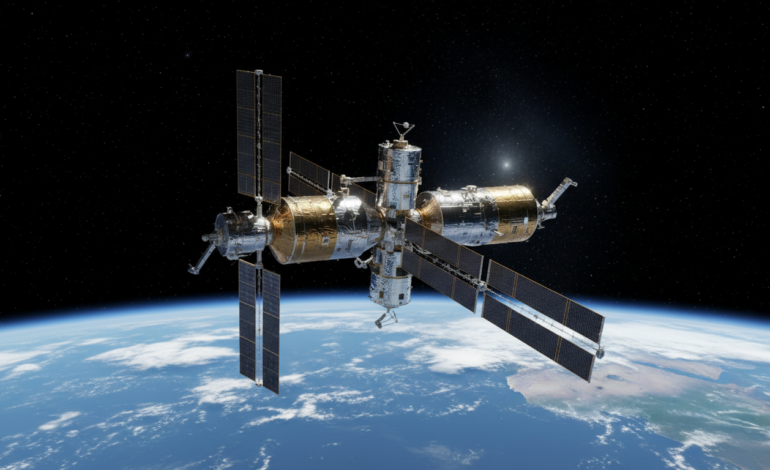
China signaled a sharper timetable for Tiangong growth as officials prepare for a post ISS era in low Earth orbit. In a Today briefing carried by China Media Group, the China Manned Space Agency said it is studying an expanded configuration that can host more experiments and visiting spacecraft, with tiangong space station 2025 flagged as a working target for module additions and higher utilization. Midway through the planning note, the agency highlighted tiangong space station 2025 as a working target for module additions and higher utilization. Live mission scheduling has already been adjusted to leave more room for cargo flights and crew rotation windows. The agency said engineering assessments are being tied to launch vehicle availability and on orbit power and thermal margins.
Scientific Demand Drives Expansion
Pressure is coming from laboratories that want faster access to microgravity racks, materials furnaces, and life science payloads. An Update issued by the Chinese Academy of Sciences described how recent bio and materials projects are competing for limited cabin time on the Tiangong space station, particularly for long duration cultivation and exposure studies, while a separate South China Morning Post report on China tech policy showed how tightening US measures can redirect capital toward domestic strategic programs, in US telecoms agency votes to expand tech crackdown on China. The same briefing noted that a tiangong space station bacteria discovery line of work is expanding, with microbiology teams tracking how strains adapt to radiation and confinement. Today, managers describe the queue as a capacity issue, not a lack of proposals.
International Collaboration Opportunities
Beijing is also pitching new access pathways for overseas institutions that want near term flight slots. In an Update on cooperation frameworks, the United Nations Office for Outer Space Affairs has previously highlighted China led calls for experiment proposals tied to China’s Tiangong space station, and current discussions center on payload readiness and shared safety reviews. Live negotiations tend to move quickly when experiments are turnkey, but slowly when hardware needs certification for crewed flight. For readers following broader China engagement abroad, officials point to docking and payload delivery interfaces as standards evolve, and Zardari in China for trade talks and CPEC focus illustrates how Beijing pairs technical cooperation with wider diplomatic calendars. Today, project offices are preparing more frequent review cycles to keep partnerships on schedule.
Comparison with the International Space Station
As Nasa plans for the end of the ISS, China is positioning Tiangong as a stable platform for continuous crewed research through the decade. Nasa has stated publicly that the International Space Station is expected to operate through 2030, with a transition to commercial destinations afterward. Live comparisons focus on what experiments can be hosted simultaneously, how many visiting vehicles can be supported, and how quickly downmass can return samples, and the China space program also faces supply chain considerations for advanced components, similar to issues described in US Tightens Chip Curbs Ahead of Xi-Trump Talks, which tracks evolving technology restrictions. In that context, tiangong space station 2025 functions as a milestone to expand berth capacity and keep utilization high while other programs retool. Update briefings from planners emphasize redundancy and maintainability over headline size alone.
Long-term Vision for China’s Space Program
The expansion plan is being framed as infrastructure for a broader national roadmap rather than a single prestige project. CMSA statements carried by Xinhua have linked station utilization to technology validation, astronaut training, and preparation for more distant exploration objectives, with priorities set by the China space program’s multi year planning cycle. Today, that translates into tighter integration between station payload selection, launcher production cadence, and ground segment automation so experiments can be monitored Live with fewer personnel. The leadership also wants more visible scientific outputs, including peer reviewed results tied to materials and biomedical work, to justify sustained budgets. Update memos from program managers stress that international participation will be welcomed when it fits safety and data governance rules. The next phase is being treated as operational maturity, not an experiment in itself.