Xpeng robotics expansion: CEO takes direct control
Xpeng robotics expansion: shift from R&D to deployment
Xpeng robotics expansion is moving from a research-led effort toward near-term deployment, with management framing the work around execution in controlled industrial settings. The company is elevating robotics from a side project to a core business line, tying progress to manufacturability, reliability testing, and software integration with its broader stack. Rather than outlining unit shipment targets, Xpeng is signalling urgency through internal accountability and tighter alignment between product definition and engineering delivery. The immediate focus is on building systems that can be validated on repeatable tasks and measured with operating metrics. That shift implies robotics is being treated as an operational program with timelines, suppliers, and safety constraints, not a long-horizon moonshot.
CEO He Xiaopeng takes charge of the robotics unit
As reported by the South China Morning Post, He Xiaopeng has taken over leadership of the company’s robotics unit, a change referred to as a “turning point.” Direct CEO oversight may compress decision cycles on hiring, partnerships, and product milestones, while also potentially raising the bar for demonstrable outcomes such as test uptime, fault rates, and maintainability. The governance change suggests robotics might now be expected to graduate from prototypes to operational trials under top-level scrutiny. The shift also increases visibility on internal resourcing decisions across Xpeng’s Guangzhou-based operations.
AI-driven humanoids as the near-term product path
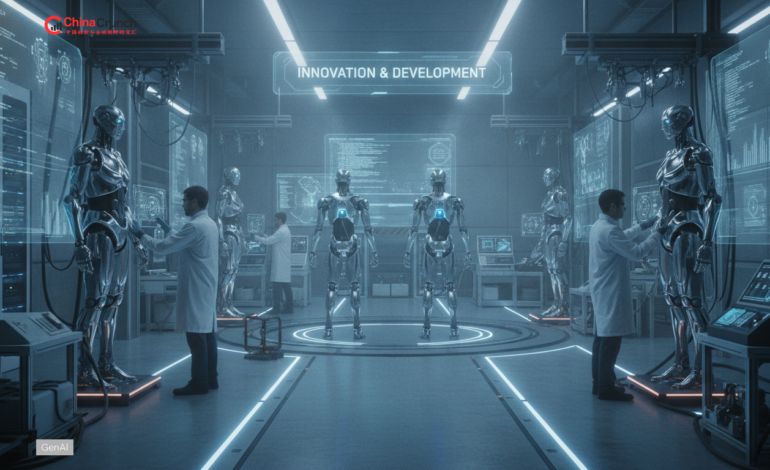
Xpeng is orienting the program toward AI-driven humanoids intended for factory and logistics work, prioritising perception, motion control, and safety systems that can be validated on repetitive tasks. The company’s approach positions humanoids less as consumer devices and more as flexible labour platforms, where performance is judged by stable autonomy, controlled interactions, and predictable maintenance, a framing that reinforces Xpeng robotics expansion beyond its initial R&D narrative. This sits alongside a wider trend in China to translate applied AI into products, discussed in the South China Morning Post analysis China leads US in everyday AI apps but firms are overvalued, experts say. For additional context on factory adoption pathways, see Humanoid robots in China: fast track to factory use, which also situates humanoids within near-term industrial deployment constraints.
Execution risks: integration, safety validation, and supply chain
The hardest work is integration: humanoids require dependable sensing, compute, actuation, and rigorous safety validation before operating around people and equipment. CEO supervision implies trade-offs on bill of materials, supplier qualification, and software verification are now board-level concerns, especially if the aim is scaling beyond showcases. Talent is another constraint, because robotics teams must blend automotive-grade quality systems with machine learning operations and field support. Xpeng has not published incident rates, endurance benchmarks, third-party certifications, or quantified deployment targets for any humanoid platform, limiting external comparisons to what the company and media coverage describe. In practice, credible progress will be measured by reproducible task completion, serviceability, and stable performance over long trial runs.
What to watch next for Xpeng’s robotics roadmap
Near-term prospects depend on whether Xpeng can translate vehicle software and manufacturing experience into repeatable robotics deployments with clear operating metrics and customer acceptance. The governance change reported by SCMP points to potentially faster iteration cycles and tighter alignment between product timelines and engineering reality, with external partnerships potentially negotiated with fewer internal handoffs. The most meaningful signal will be sustained field trials in controlled industrial sites, including the ability to run for long durations with predictable maintenance and safe human-adjacent operation. If reliability, safety validation, and unit economics converge, robotics could become a second growth pillar alongside EVs. If not, the program risks remaining stuck in prototype cycles even as interest in humanoids accelerates across the sector.