BYD Q1 profit drops 55% as EV market strains
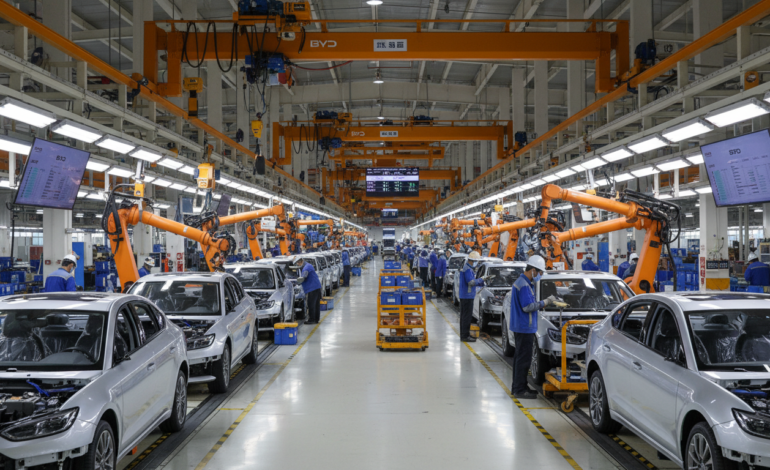
Analyzing BYD’s First-Quarter Financial Results
BYD opened the quarter facing intense pricing pressure and shifting consumer demand across major cities. In its first quarter filing to the Hong Kong Stock Exchange, the company said net profit fell 55% year on year, setting a sharper tone for investors Today. Revenue still rose, but the margin squeeze stood out in management discussion, where the BYD profit slump was linked to tougher competition and a faster pace of promotions. Live market reaction was mixed as traders weighed scale advantages against declining profitability. The company also flagged higher operating costs tied to product mix and channel spending, while saying its core strategy remains focused on volume and technology.
Factors Contributing to the Profit Decline
Executives pointed to price competition and heavier incentives as key drags on profitability, according to the same Hong Kong Stock Exchange filing. In a separate Update on sector conditions, the South China Morning Post described how China EV market players and battery makers are racing to cut charging times, a trend that can lift research and manufacturing expenses, as detailed in China EV charging race to under 10 minutes China EV charging race to under 10 minutes. Dealers and platforms also intensified discounting Today, leaving less room to absorb logistics, warranty, and marketing costs. Live checks in showrooms reflected faster model turnover, which can raise inventory and promotion outlays. For wider context on regulatory scrutiny in adjacent tech deals, see China Blocks Meta $2 Billion Manus AI Deal as Tech Rivalry Deepens China Blocks Meta $2 Billion Manus AI Deal as Tech Rivalry Deepens.
BYD’s Strategy to Address Market Challenges
Management framed the response around refining model lineups, tightening cost controls, and prioritizing higher value trims where demand supports pricing. The company reiterated that scale and vertical integration help buffer volatility, while acknowledging that near term margins can remain under pressure, according to the Hong Kong Stock Exchange filing. As a Live tactic, BYD has leaned on rapid product cycles and broader channel reach to protect volume in electric vehicles even when rivals match discounts. An Update from domestic industry briefings has also highlighted increased attention on batteries and energy storage integration, which can diversify earnings streams across cycles. Related coverage of mobility and power trends is tracked in Chinese Robotaxi and Energy Breakthroughs Signal Global Tech Shift Chinese Robotaxi and Energy Breakthroughs Signal Global Tech Shift, as the sector pushes for more efficient commercialization pathways.
The Impact on China’s EV Market Landscape
The earnings drop underscored how quickly profitability can compress when multiple brands chase the same buyers with similar features. Analysts at brokerages cited by Reuters in April noted that price wars in the China EV market are reshaping market share tactics, with leaders forced to spend more to defend volume. The BYD profit slump also changes the negotiation balance with suppliers and dealers, because margin headroom is thinner when promotions become baseline. Today, competitors are watching whether the leader maintains aggressive pricing or pivots toward premium differentiation. Live sentiment across investors has tilted toward scrutiny of cash flow, as operating leverage becomes less reliable in a discount cycle. An Update on cost discipline will likely influence how smaller brands fund new launches and whether consolidation accelerates.
Future Projections for BYD’s Performance
Near term expectations hinge on whether discounting stabilizes and whether new models can restore pricing power without sacrificing unit growth. BYD signaled continued investment in technology and manufacturing efficiency in its quarterly filing to the Hong Kong Stock Exchange, while emphasizing resilience from diversified operations. Today, analysts are focused on how quickly BYD financials can normalize if sales volumes hold and costs per vehicle decline through scale gains. Live tracking of deliveries and incentive levels will matter more than headline revenue when margins are thin. Another Update investors will seek is how management balances international expansion spending with domestic defense, because both demand capital. The next quarter will test whether cost controls and product mix improvements can offset ongoing competition.