China expands maritime rescue reach in deep seas
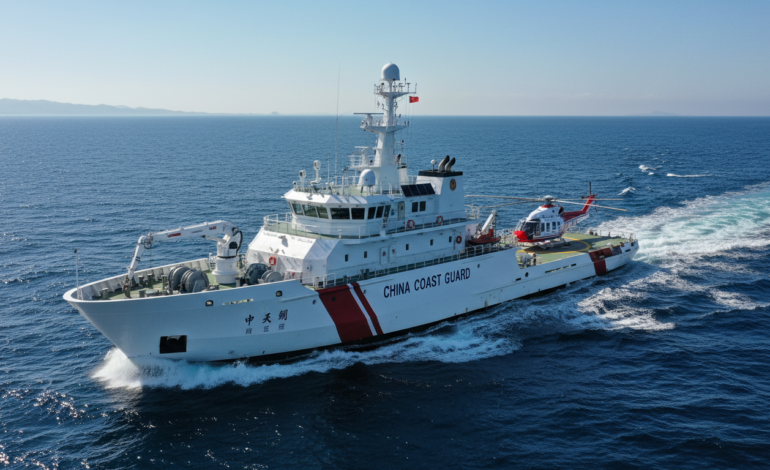
Expansion of Rescue Capabilities
Maritime agencies in China are moving this week to extend response coverage farther offshore and deeper underwater, as operating areas broaden. In a Live briefing carried by China Central Television, officials said newly commissioned rescue assets are being integrated with aviation units to shorten time to scene. The same segment described China maritime rescue as a system that now trains for longer endurance, heavier lift, and multi day casualty care at sea. Today, dispatch centers are also running a rolling Update cadence for coastal provinces, aiming to coordinate hospital intake and ship towing. The Ministry of Transport said its maritime safety administration is tightening interoperability standards so vessels and aircraft can share incident data more quickly.
Technological Innovations in Maritime Rescue
Operators are also putting more emphasis on rescue technology that can function in poor visibility and at greater depth, where conventional diving is limited. A Live segment on CCTV showed remotely operated equipment being exercised with deck cranes and dynamic positioning, which the broadcaster said improves station keeping in rougher seas. Today, command posts are using digital mapping and satellite communications to issue Update messages to multiple teams without relaying through a single ship, and for wider context on how Chinese policy actions can ripple into overseas logistics and safety planning, readers have tracked related coverage at global stakes in Xi Trump summit analysis. The South China Morning Post has also examined maritime risk in a regional chokepoint in Strait of Hormuz maritime risk commentary.
Impact on International Maritime Safety
Regional shipping interests are watching whether expanded coverage translates into faster assistance for foreign flagged vessels when incidents occur near major routes. The International Maritime Organization’s SAR framework sets expectations for coordination across borders, and maritime safety planners often measure performance by response time and communications clarity. In China maritime rescue exercises described by CCTV, coordinators emphasized multilingual radio discipline and standardized distress formats to reduce confusion during handoffs. Today, analysts note that more capable assets can also support joint incident management when neighboring authorities request help. A Live feed from a provincial maritime center showed simulated triage alongside towing preparation, then an Update was issued to participating ports to align berthing windows. Officials said the aim is smoother coordination, not a change in legal responsibilities at sea.
Challenges in Deep Sea Operations
Even with new equipment, deep sea operations remain constrained by weather windows, crew fatigue, and the physics of pressure and temperature. A Ministry of Transport statement carried by CCTV noted that drills are now stressing sustained operations that require onboard medical support and redundant power systems. Today, rescue planners focus on failure modes like thruster outages and communications dropouts, because a single fault can halt a recovery at depth. In a Live operations center demonstration, teams ran an Update drill for lost contact scenarios and practiced switching to backup satellite channels. Research and monitoring capacity that supports these missions, including ocean and environmental sensing, is expanding in parallel with other national networks described in China environmental monitoring network plan. Trainers said realistic simulations are essential before crews attempt complex recoveries offshore.
Future of China’s Maritime Ambitions
Officials are framing the current push as a readiness effort tied to wider high seas activity, including longer range commerce and scientific work that increases exposure to emergencies. CCTV said procurement and training are being aligned so that aviation crews, ship masters, and medical staff can deploy under a unified chain of command. Today, internal assessments highlighted in a Live broadcast emphasized common technical standards for rescue technology, from winches to data links, to reduce compatibility issues between units. A rolling Update process is also being tested to keep regional centers synchronized during multi day incidents, with planned evaluations after each drill cycle. Planners described China maritime rescue as increasingly system based, where logistics, medicine, and communications are treated as one mission package. The stated priority is dependable response capacity as operations extend farther from shore.